
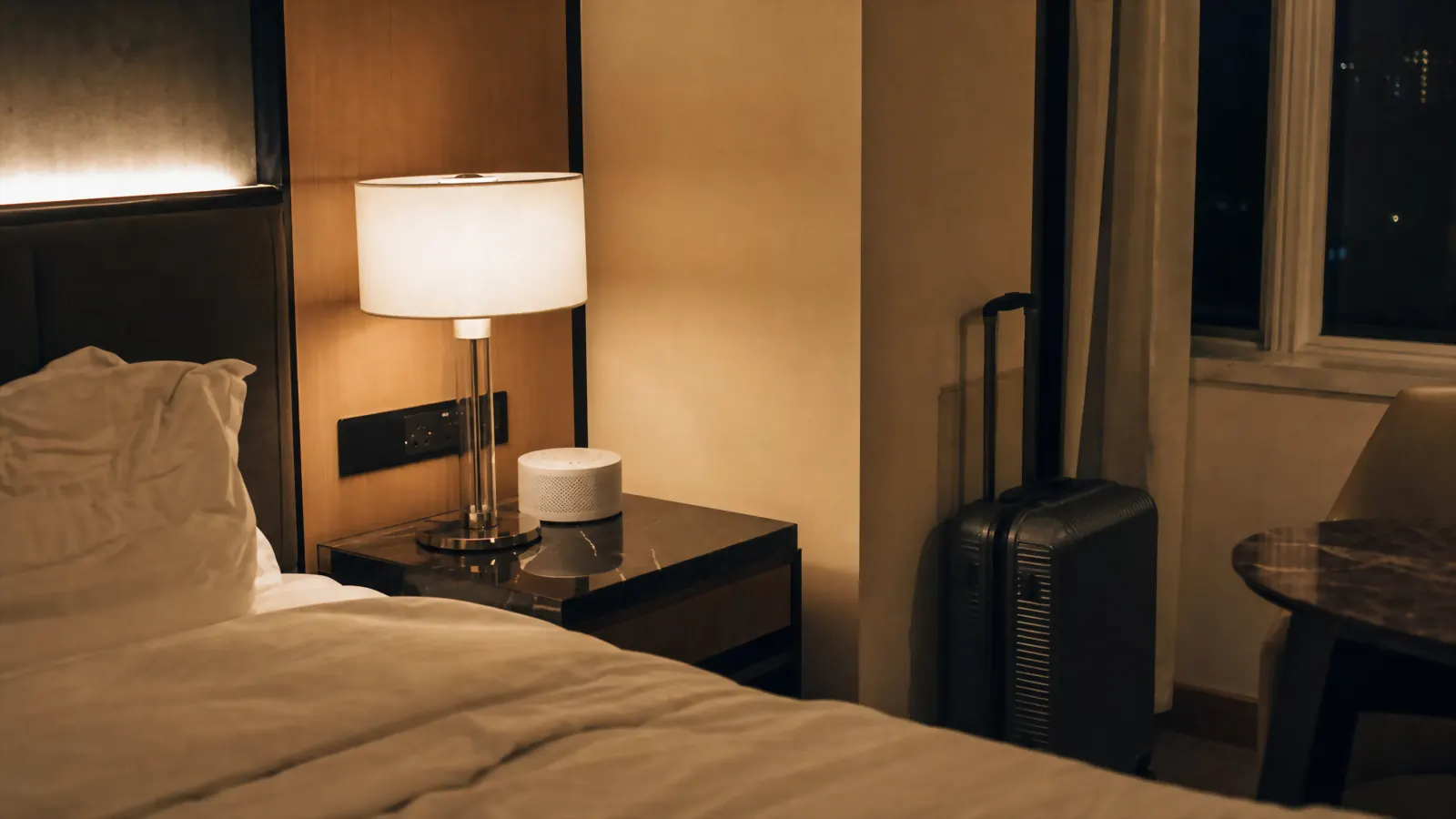
A hotel room is never actually quiet, even the good ones. There's a hallway that carries voices at eleven at night, an ice machine two doors down that cycles on its own schedule, an HVAC unit that clicks and hums whenever it wants, and walls that were built to a budget, not a soundproofing spec. You can control almost nothing about that. What you can control is what your ear is listening to underneath all of it, and that's the whole idea behind using white noise in hotels, giving yourself one steady sound so the random stuff stops being the loudest thing in the room.
I started carrying a Dreamegg portable noise machine after enough nights of lying awake doing the math on how many hours of sleep I had left before a 6am flight. It's small, it runs on a rechargeable battery or plain USB power, and it holds 21 soothing sounds, which sounds like more than you need until you're standing in an unfamiliar room at midnight trying to figure out what's actually keeping you up. This isn't a medical fix and I'm not going to pretend it is. It's a practical routine, five steps, that I run in almost every hotel room I check into, and it's made a bigger difference to how I sleep on the road than anything else in my bag.
I worked most of this out the hard way, on a conference trip to a downtown hotel connected straight to a convention center. My room sat directly across from a bank of elevators, with an ice machine humming down the same stretch of hallway and a shared wall with the room next door that turned out to carry sound better than either of us would have liked. None of that was fixable by asking the front desk for a favor at 10pm. What actually worked was building a routine around the one thing I could control, and that's the routine below.
Skip the trial and error, here's what I actually pack
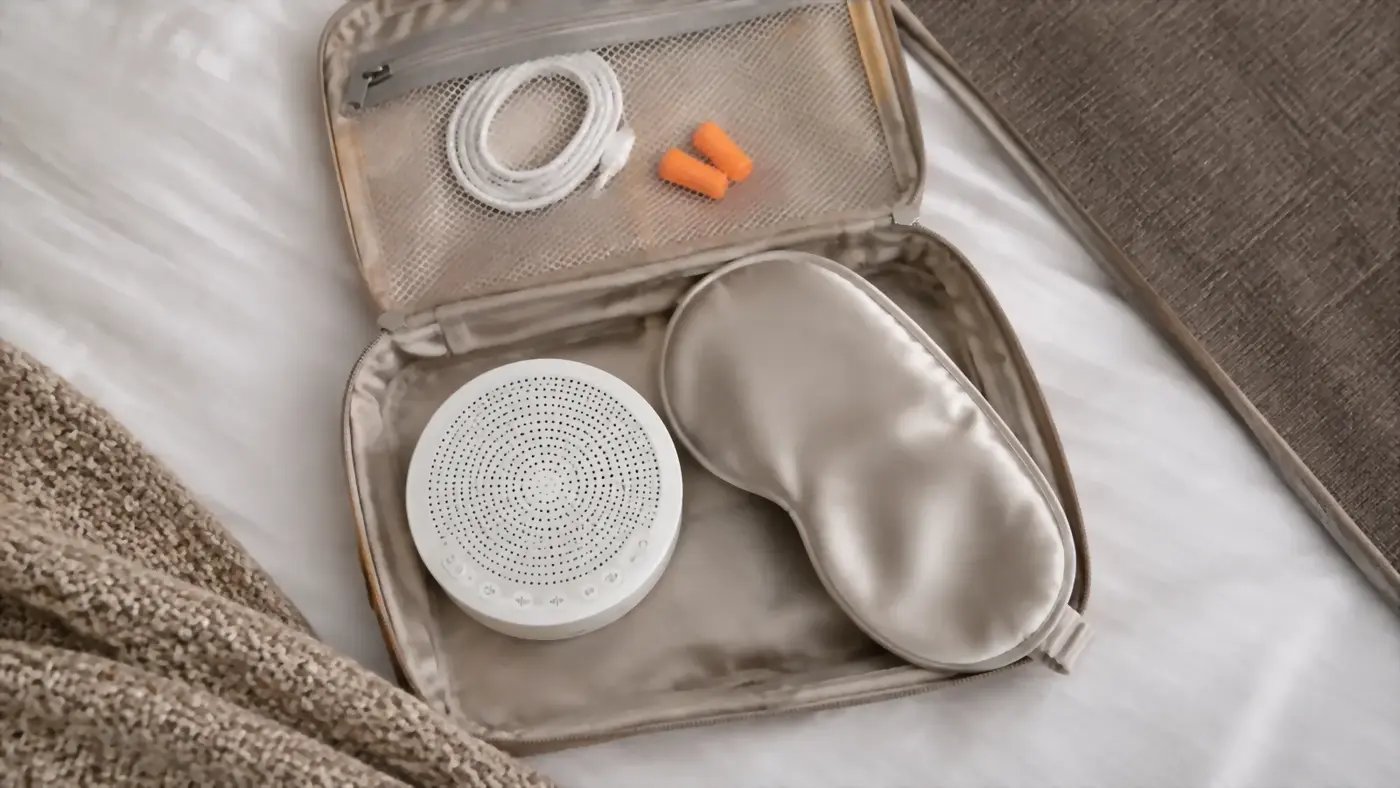
Before we get into the steps, this is the machine the whole routine is built around. It's small enough to disappear into a packing cube and it's the one piece of gear that's followed me into more hotel rooms than anything else I own.
Amazon Check Today's Price on Amazon →Step 1: Pick your spot in the room before you do anything else
Placement matters more than people expect, and it's the step most travelers skip because they're in a hurry to unpack. Walk the room first. Figure out which wall the hallway noise, the elevator bank, or the neighboring room is coming through, and put the sound machine on the nightstand closest to that wall, not the one closest to your pillow. The goal isn't to blast sound directly at your head, it's to build a wall of steady sound between your ear and the source of the noise.
If the room has two nightstands, use the one nearer the door or the shared wall rather than the one under the window, since window noise in most hotels is more distant and diffuse, traffic hum rather than a slamming door. If you can't tell where the problem is going to come from yet, because you've just arrived and the hallway is quiet, default to the wall shared with the room next door. That's the wall that surprises people most often, usually well after midnight.
Give yourself permission to move it later. I've reset the machine's position more than once after 9pm, once I actually heard where the trouble was coming from that particular night. A hotel room's noise pattern isn't always obvious at 4 in the afternoon when you check in and everything is calm. Treat the first placement as a guess worth testing, not a decision you're locked into for the whole stay.
Step 2: Set the sound before you unpack
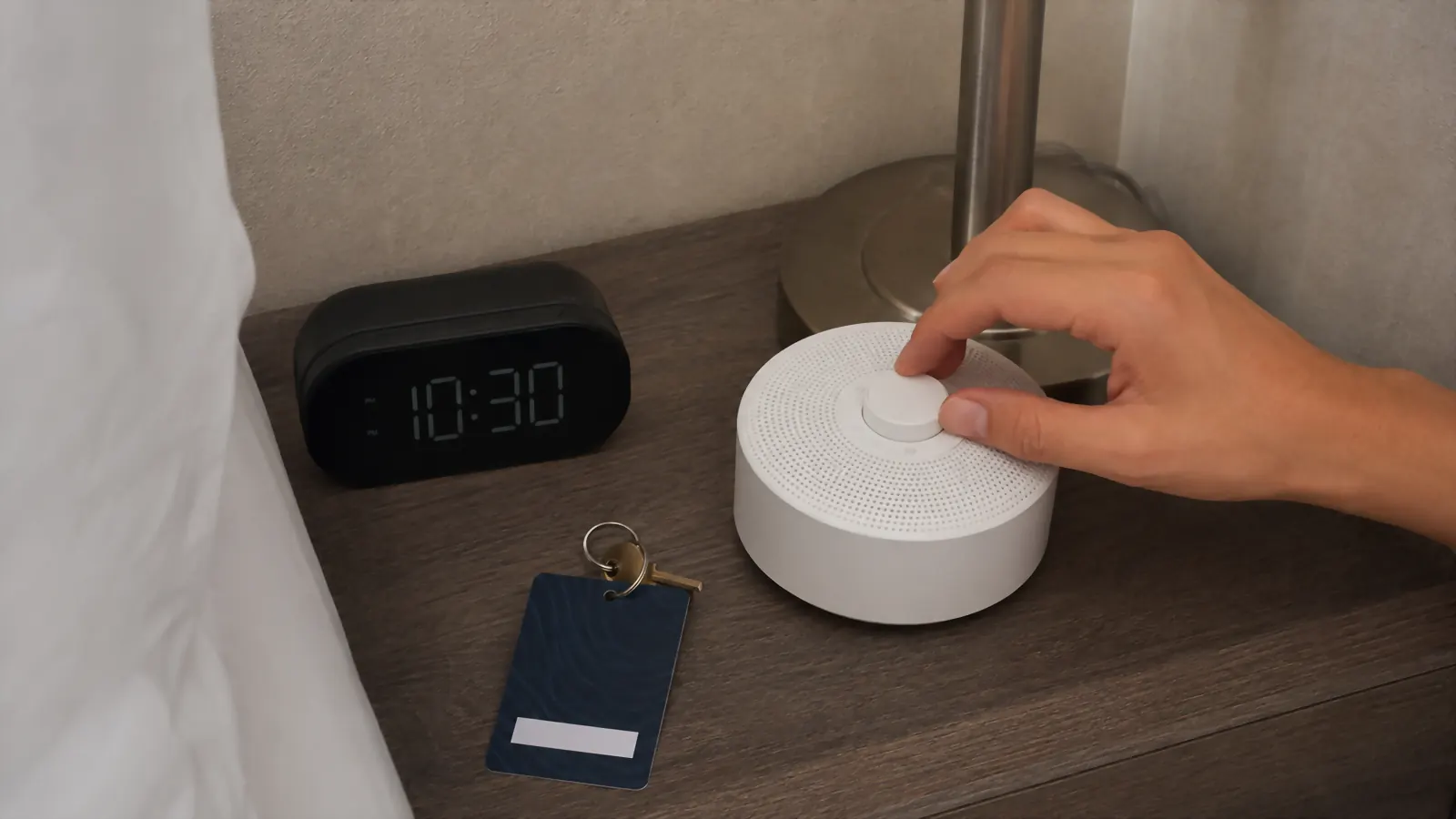
This step is less about the machine and more about the habit. The first thing I do in any hotel room now, before I hang anything up or plug in a charger, is set the sound machine on its nightstand and turn it on. It runs while I unpack, while I shower, while I'm ordering room service or heading down for dinner. By the time I actually get into bed, that sound has already been part of the room for an hour or two, which matters more than it sounds like it would.
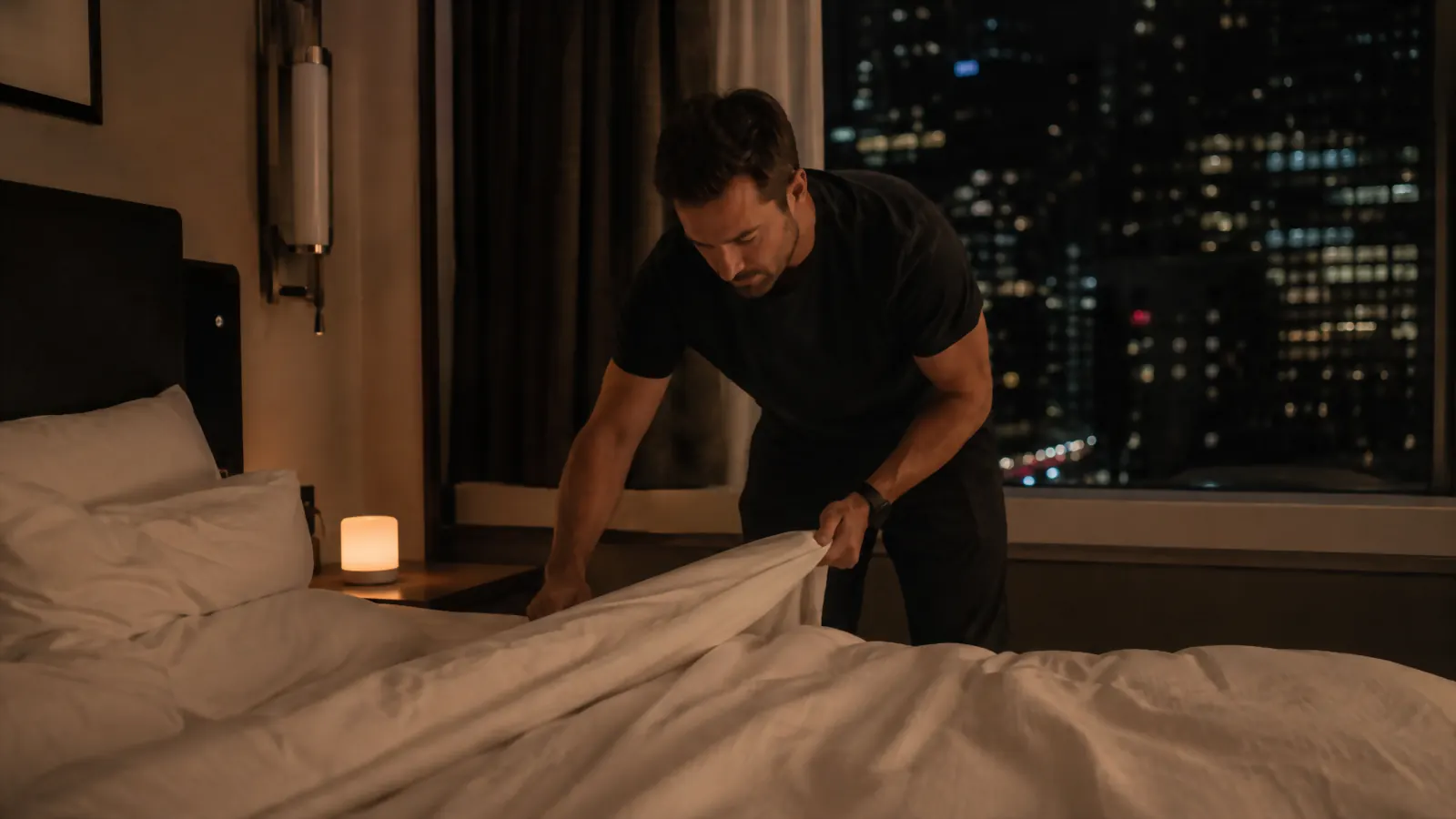
A sound you switch on right as you're trying to fall asleep still registers as new, something your brain is half aware of and half evaluating. A sound that's already been running in the background for a while just becomes part of the room, the way a ceiling fan does at home. Starting it early is the cheapest trick in this whole routine and the one I'd tell anyone to do first.
It also solves a smaller, more annoying problem, which is fumbling with buttons in the dark. If you've already picked a sound and a volume before the lights go off, you're not standing over the nightstand at midnight squinting at tiny buttons trying to find the setting you want. You just get into bed and it's already right.
Step 3: Match the sound to the noise you're actually fighting
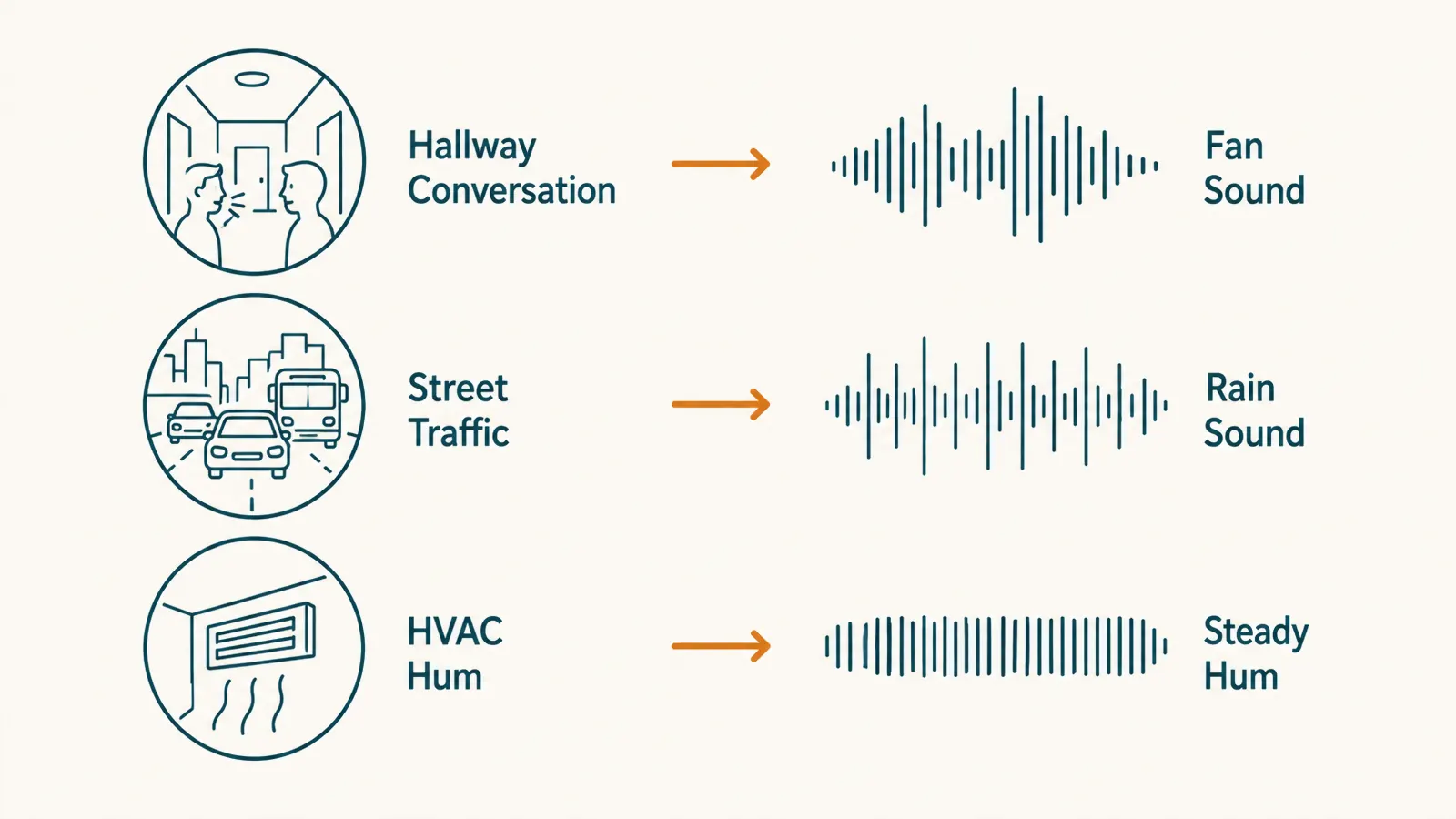
Not every sound in the library does the same job, and this is where having 21 options on the Dreamegg actually pays off instead of just being a number on the box. Steady mechanical hum, the kind that comes from an old HVAC unit or an elevator motor, gets covered best by a plain fan or white noise setting, something equally steady and equally flat. Traffic and street noise, especially in a downtown hotel, tends to respond better to a rain or water sound, since it has more texture and does a better job masking the stop-start rhythm of cars and horns.
Hallway conversation and footsteps are the hardest category, because voices carry differently than mechanical noise, and no sound machine is going to fully erase a loud conversation right outside your door. What a steady fan or hum setting does is raise the floor, so a normal hallway voice at a normal volume gets absorbed into the background instead of standing out. Try one sound for a night, and if it isn't cutting the specific noise you're dealing with, switch to a different texture the next night rather than assuming the machine itself isn't working.
I keep it simple in practice and rotate through three sounds no matter which hotel I'm in, one fan-style setting for mechanical hum, one rain setting for traffic and street noise, and one white noise setting as a fallback when I can't tell what's actually bothering me yet. That's enough variety to cover most hotel rooms without spending twenty minutes scrolling through the whole menu when you'd rather be asleep.
Step 4: Build a charging habit that survives the trip
The Dreamegg runs on a rechargeable battery, and it also runs on plain USB power, which means you have two ways to keep it going and no excuse for it dying on you mid-trip. The habit that's worked for me is simple: it charges during the day, while I'm out at meetings or sightseeing and not using it anyway, and it runs on battery overnight, disconnected from the outlet so a stray charging cable across the room isn't something I trip over at 3am.
The part that actually takes discipline isn't the charging itself, it's remembering to plug it back in every single day rather than only when you notice the battery is getting low. I keep the charging cable in the same zippered pocket as the machine, always, so packing it is not a decision I make each morning, it's just what goes back in that pocket before I leave the room. Skip this step even once on a multi-night trip and you'll find out exactly when, usually the one night you needed it most.
It's also worth knowing the outlet in a lot of hotel rooms isn't near the nightstand, it's behind a desk or under a TV console. On those nights, plug it in on USB power directly, run the cable along the baseboard instead of across the walkway to the bathroom, and skip the battery entirely. Both options existing is the point, you're never stuck with just one plan for keeping it running.
Step 5: Protect the routine on travel days, not just at the hotel
The nights that wreck your sleep most aren't always the ones in a loud hotel, they're the connecting flights, the red-eyes, and the first night in a new time zone, when your body has no idea what time it thinks it is. This is where keeping the sound machine consistent actually helps, because a familiar sound is one of the few things you can carry across every version of a bad night, whether you're in seat 14C or a hotel room you checked into an hour ago.
On travel days I run the same sound I've been using all trip, low volume, tucked into a seatback pocket or set on the tray table facing up. It's not about drowning out the cabin, it's about giving your ear one familiar, steady thing to focus on instead of the general chaos of a flight or a layover. The consistency is the point. Switching sounds every night undercuts the whole idea, since part of what makes this work is your brain learning to associate that specific sound with sleep, wherever you happen to be.
The same logic applies on the last night of a trip, right before you head home. It's tempting to skip the routine once you know you'll be in your own bed the next night anyway, but a poor night's sleep before a travel day just makes the travel day itself worse. Keep the machine running through the last night the same as every other one, then let it rest once you're actually home.
What Else Helps a Hotel Room Sleep Quieter
A sound machine handles the steady, ambient stuff well, but it isn't the only tool worth packing. A pair of foam earplugs is a reasonable backup for a genuinely loud room, a bar under your window, a hallway that stays busy past midnight, and I keep a pair in the same pouch as the machine for exactly those nights. Blackout curtains vary wildly by hotel, so a simple sleep mask closes that gap when the room's curtains let in more streetlight or hallway glow than you'd like.
Requesting a room away from the elevator bank or the ice machine at check-in costs nothing and solves the problem at the source rather than covering it up, and most front desks will do it if you ask when you check in rather than after you've already unpacked. A do not disturb sign on the door through the night cuts down on housekeeping carts and hallway traffic outside your door earlier than you'd like. None of this is medical advice, it's just what's worked across a lot of ordinary, unremarkable hotel stays, small habits that add up rather than one trick that fixes everything.
The machine doesn't make the hotel quiet. It gives your ear one steady thing to hold onto so everything else stops being the loudest sound in the room.
Build the routine around a machine that's actually made for this
Placement, timing, and sound choice all matter, but none of it works without a machine that runs reliably off a battery and travels light. This is the one I pack.
Amazon Check Today's Price on Amazon →