
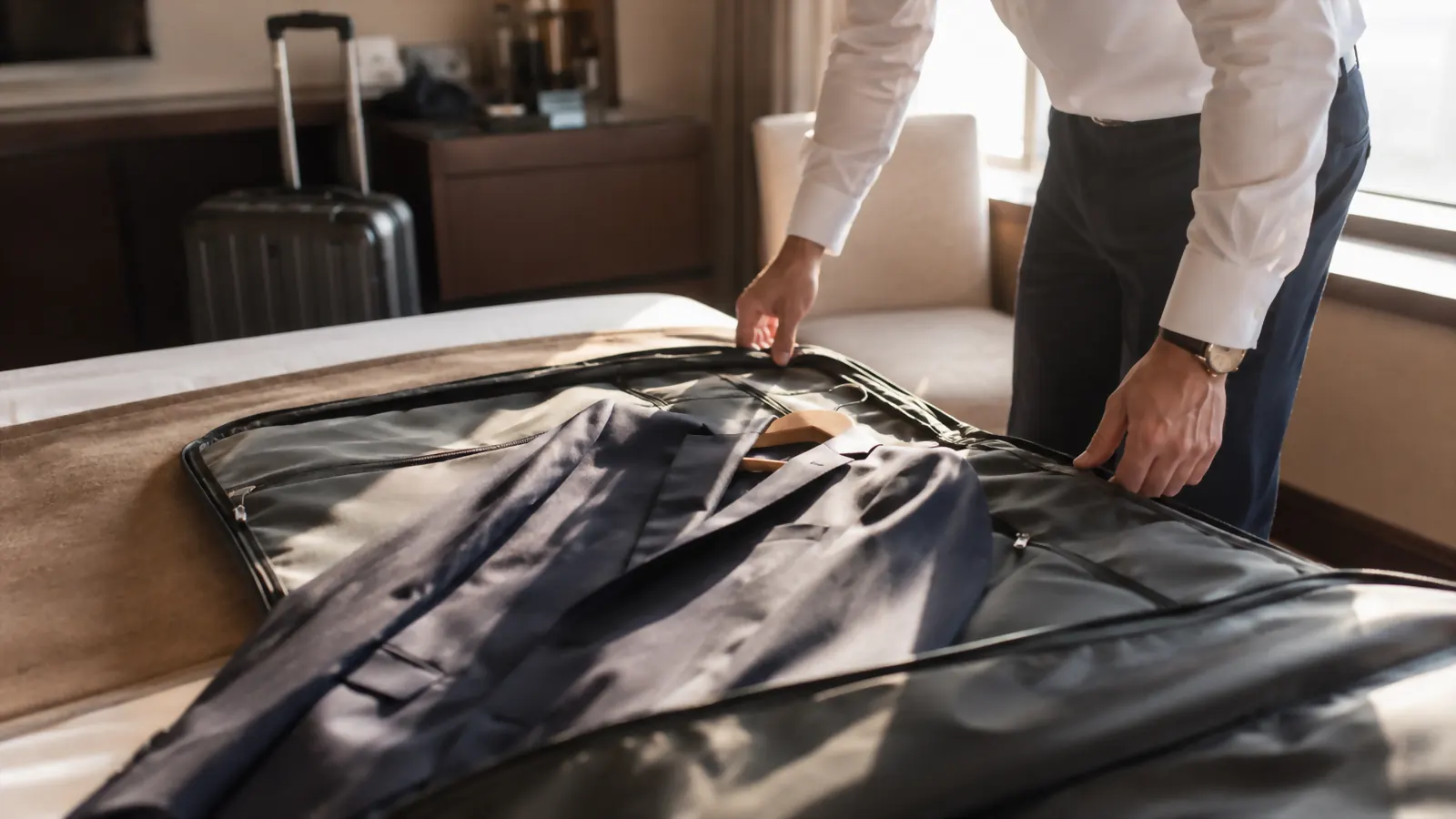
I've packed a suit for travel more ways than I'd like to admit: rolled into a ball at the bottom of a duffel, folded flat under a stack of shirts in a wheeled suitcase, and eventually zipped into a dedicated Lazebox garment bag. After enough weeks away from home to lose count of the trips, the difference stopped being subtle. A garment bag and a suit folded into a regular suitcase solve the same problem, getting a suit from point A to point B, in genuinely different ways, and only one of them has ever let me walk into a meeting without hunting down an iron first.
The short answer, if you only read one paragraph of this: the Lazebox 43 inch travel garment bag wins on the thing that actually matters when you're the one wearing the suit, how it looks the moment you unzip it. Folding a suit flat into a regular suitcase wins on simplicity, one bag on your shoulder instead of two, and it slides into a standard overhead bin without anyone giving it a second look. Neither approach is wrong for every trip. Here's what months of doing both, back to back, actually taught me.
| Lazebox garment bag | Folded into a suitcase | |
|---|---|---|
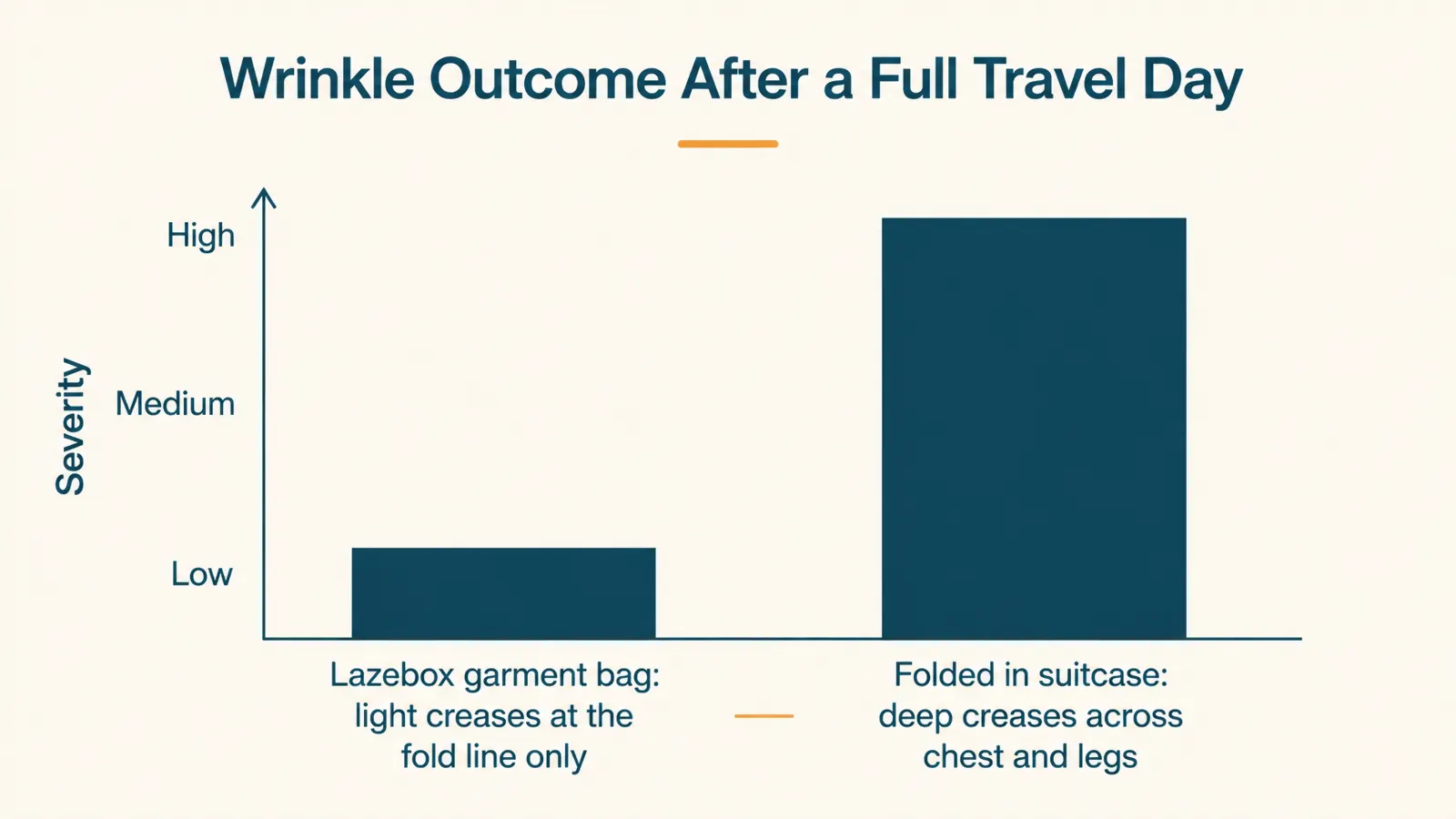
| Wrinkle outcome after a full travel day | Suit hangs flat the whole trip, creases only at the deliberate fold line | Deep creases across the chest, sleeves, and behind the knees |
| Packing time before you leave | A few extra minutes laying the suit flat and zipping a second bag | Faster, fold it in with everything else already going in the bag |
| Whether the suit needs pressing on arrival | Usually just needs a hang, rarely needs an iron | Almost always needs a hotel iron or a steamy bathroom before you can wear it |
| Behavior in an overhead bin | 43 inches long, often needs draping over a rollaboard or early boarding to claim space | Standard carry-on dimensions, slides into any bin without a second thought |
| Storage for accessories like a tie or belt | Has a dedicated accessories zipper pocket, separate from the suit itself | Shares space with shoes and everything else, nothing dedicated |
| Built specifically for travel and business trips | Heavy duty construction made for repeated packing on business trips | A general purpose suitcase not designed around protecting a suit's shape |
Where the Lazebox Garment Bag Wins
The single biggest difference shows up the moment you unzip the bag at the other end. A suit hung flat inside the Lazebox garment bag and traveled point A to point B without being folded around anything, it lands with creases only where you folded it deliberately, usually just the one fold at the waist. A suit folded flat into a suitcase, buried under shoes and a dopp kit and whatever else made it into the bag that morning, comes out with creases running across the chest, down the sleeves, and behind the knees of the trousers. That's not a one time thing either. It happens on almost every trip where the suitcase gets tossed around a curb, stacked under other bags at a connection, or squeezed into a trunk. The garment bag protects the shape of the suit because nothing else is pressing against it the whole way there.
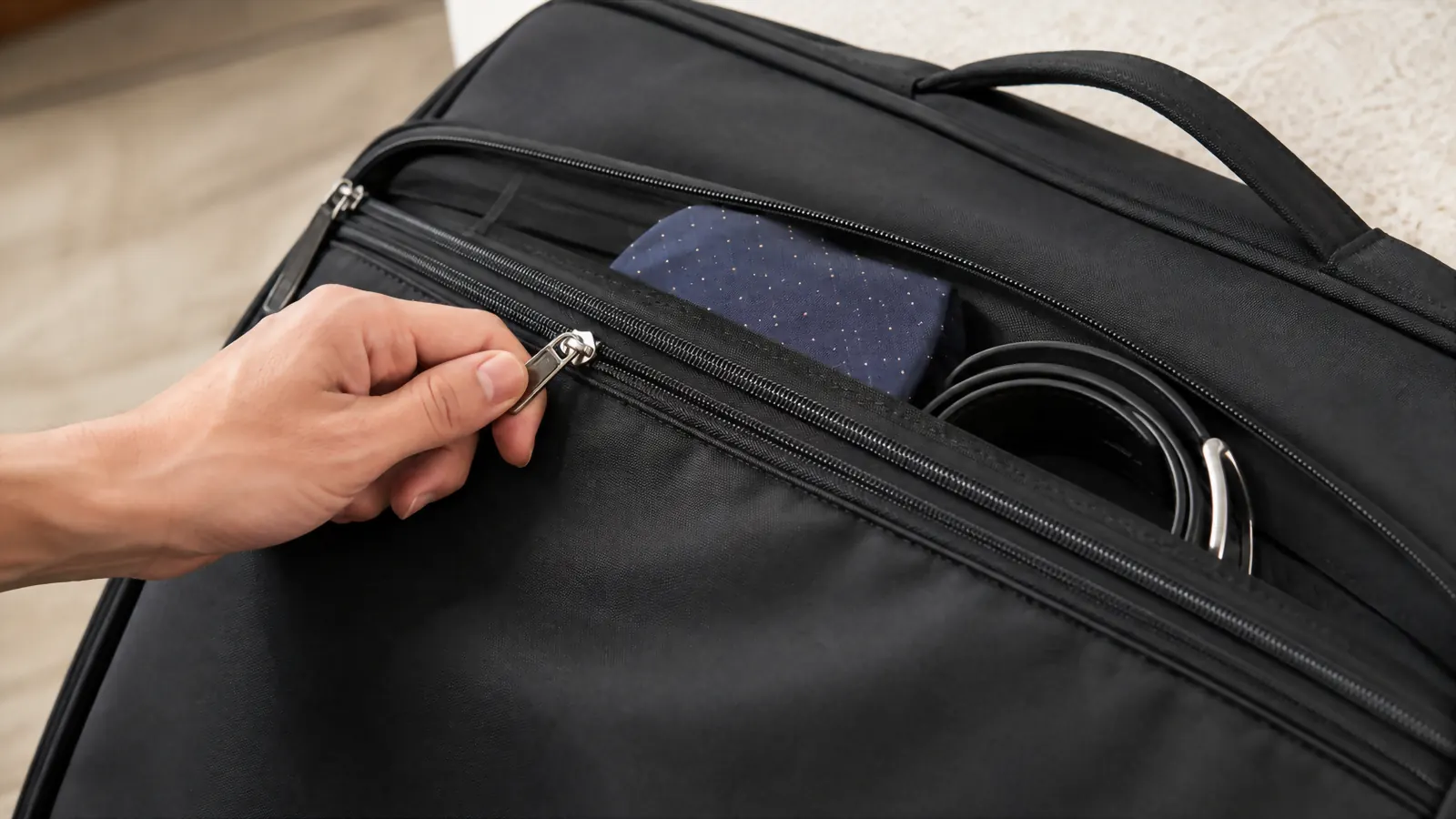
The build matters here too. Lazebox describes this bag as heavy duty and made specifically for travel and business trips, and after repeated packing and unpacking, that's the part that's held up. It also has an accessories zipper pocket, which sounds small until you're the one trying to find a tie, a belt, or a spare pair of dress socks without unpacking half a suitcase to look for them. Folding a suit into a regular suitcase gives you none of that. Everything shares the same space, the suit, the shoes, the accessories, and whatever gets packed on top wins the fight for space every time. If your trip only has room for one bag that's built around protecting a suit specifically rather than clothes in general, the garment bag is doing a job the suitcase was never designed for.
Where Folding Into a Suitcase Wins
Packing speed is where folding wins outright. Laying a suit flat and rolling or draping it into a suitcase takes about as long as folding any other piece of clothing, a couple of minutes at most, and there's no extra bag to zip, carry, or account for at security. The Lazebox garment bag asks for a bit more care. You're laying the jacket and trousers out flat, smoothing the fold, and zipping a longer bag that then has to be carried separately from your main suitcase or duffel. On a short trip where the suit is the only reason you're checking a bag at all, or where you're moving fast between a car and a gate with your hands already full, the suitcase's simplicity is real. There's a version of business travel where one bag beats two every time, and that's the suitcase's whole argument.
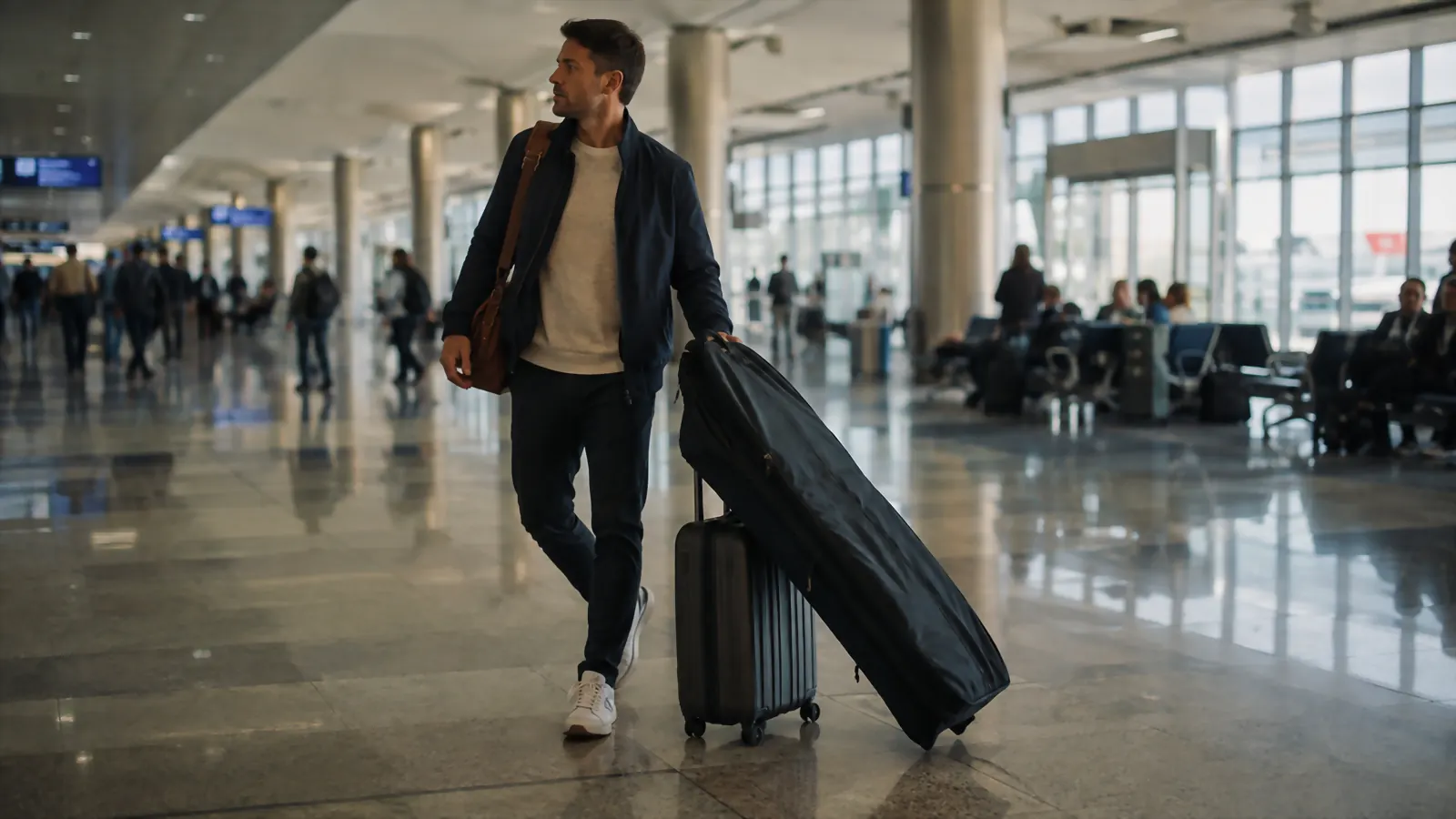
The other honest win for the suitcase is the overhead bin. A rolling suitcase is built to standard carry-on dimensions and slides into a bin the same way every other passenger's bag does, no boarding priority required, no folding a long bag in half to make it fit. A 43 inch garment bag is long. On a full flight, that usually means either draping it over a rollaboard and hoping there's room, or boarding early enough to claim bin space before it fills up with everyone else's roller bags. If you're regularly on full flights, boarding in a later group, or connecting through small regional jets with tighter bins, the suitcase gives you one less thing to negotiate with a flight attendant about. It's a real tradeoff, not a small one, and I don't pretend the garment bag wins that fight.
The suit you're wearing in an hour shouldn't depend on finding a hotel iron
The Lazebox garment bag is built to keep a suit hanging flat through a real travel day, not just a photo. If pressing before every meeting is getting old, see today's price on Amazon.
Amazon Check Today's Price on Amazon →A suit that comes out of a suitcase looking like it slept in the overhead bin is a suit you're pressing before a meeting instead of walking into one.
How I Actually Tested This
I didn't decide this after one trip. I ran the Lazebox garment bag and a folded suit in a regular suitcase back to back across a stretch of weeks where I was away from home more often than not, the kind of stretch where you stop noticing which hotel room you woke up in. Same suit, same general routine each way, same effort at packing it carefully both times. The garment bag went out flat on the bed at the hotel, hung in the closet where there was one, or draped over a chair back when there wasn't. The folded version went straight into the suitcase the way most people actually pack, tucked in with everything else because that's how a real trip works, not a lab test. The point was never to find the perfect packing technique. It was to see what a suit actually looks like after a normal week of travel, done both ways.
What surprised me wasn't the wrinkle difference itself, I expected that. It was how much the wrinkle difference changed the first hour of a trip. Pulling a suit out of the garment bag meant hanging it up and moving on with my morning. Pulling the folded version out of the suitcase usually meant finding out whether the hotel had an iron, and if not, hanging it in the bathroom and running the shower hot enough to steam the worst of it out before I could put it on. That's not a huge deal once. Across a string of trips, it adds up to real time spent managing a problem the garment bag mostly avoids. The suitcase didn't do anything wrong, it just does what folding fabric and stacking weight on top of it always does. The garment bag is built around not doing that.
The Accessories Pocket in Practice
The accessories zipper pocket on the Lazebox bag ended up mattering more than I expected going in. A tie rolled loose in a suitcase pocket gets creased along with everything else, and a belt tossed in with dress shoes picks up scuffs it didn't need. Having one dedicated pocket for the small things that go with a suit, a tie, a belt, a spare collar stay, meant I wasn't digging through a packed suitcase the morning of a meeting trying to find one specific item. Folding into a suitcase doesn't give you that separation. Everything for the suit ends up scattered wherever there was room when you packed, which usually means mixed in with the rest of your clothes. It's a small thing on paper, but on a morning where you're already running behind, knowing exactly where the tie is turns out to matter.
What Changes on a Multi-Leg Trip
The comparison gets more lopsided on a multi-leg trip. A single flight with a rental car waiting is one thing, folding a suit into a suitcase for a short hop rarely ruins it completely. Add a connection, a layover long enough to recheck bags, or a second flight the next morning, and the folded suit keeps getting handled, restacked, and repacked every time you open that suitcase for anything else along the way. The garment bag doesn't have that problem because the suit isn't sharing space with your shoes and your dopp kit, it's hanging flat on its own the whole way. On a trip where I'm out for most of a week, moving through two or three cities, the suitcase version of a suit looks noticeably worse by the second stop than it did leaving home. The garment bag looks close to the way it did when I packed it, because nothing new got piled on top of it along the way.
What I Do With the Suitcase Once the Suit Is Out
Once the suit is out of the picture, the suitcase argument actually gets a little better, not worse. A garment bag traveling alone still has to be carried through the terminal, checked at the gate on a full flight, and found a spot in a hotel closet. A suitcase, once it's not also responsible for keeping a suit flat, goes back to doing what it's good at, holding everything else, shoes, toiletries, the rest of the trip's clothes, without worrying about crushing anything delicate. That's part of why I still travel with both on longer trips rather than picking one system for everything. The garment bag handles the one item that actually needs protecting, and the suitcase handles the rest the way it always has. Treating them as rivals for every single trip misses that they're often doing two different jobs at once.
Who Should Buy Which
If you're carrying a suit more than a couple of times a year, especially on trips where you're going straight from the airport or the car into a meeting, the Lazebox garment bag is the better call. The whole point of it is protecting the one piece of clothing you can't show up in wrinkled, and it's done that job well enough that I don't pack a suit any other way anymore. It costs you a second bag to carry and a little more care at packing time, and for what it protects, that trade has been worth it on every trip that's actually mattered.
Folding into a suitcase still makes sense for the traveler who needs a suit rarely, who's genuinely trying to move through an airport with one bag and nothing else, or who's connecting through small planes with tight overhead bins where a long garment bag becomes its own hassle. If pressing a suit for twenty minutes in a hotel room the night before a meeting doesn't bother you, or you've already got a steamer and the time to use it, the suitcase's simplicity might outweigh the wrinkle it costs you. For everyone else, the difference in how a suit looks the moment you actually need it is enough to make the garment bag worth carrying as its own bag.
Stop packing a suit like it's just another shirt
Months of back to back trips made the difference obvious. See today's price on the Lazebox travel garment bag and give the next suit a fair shot at looking the way it did when you packed it.
Amazon Check Today's Price on Amazon →